
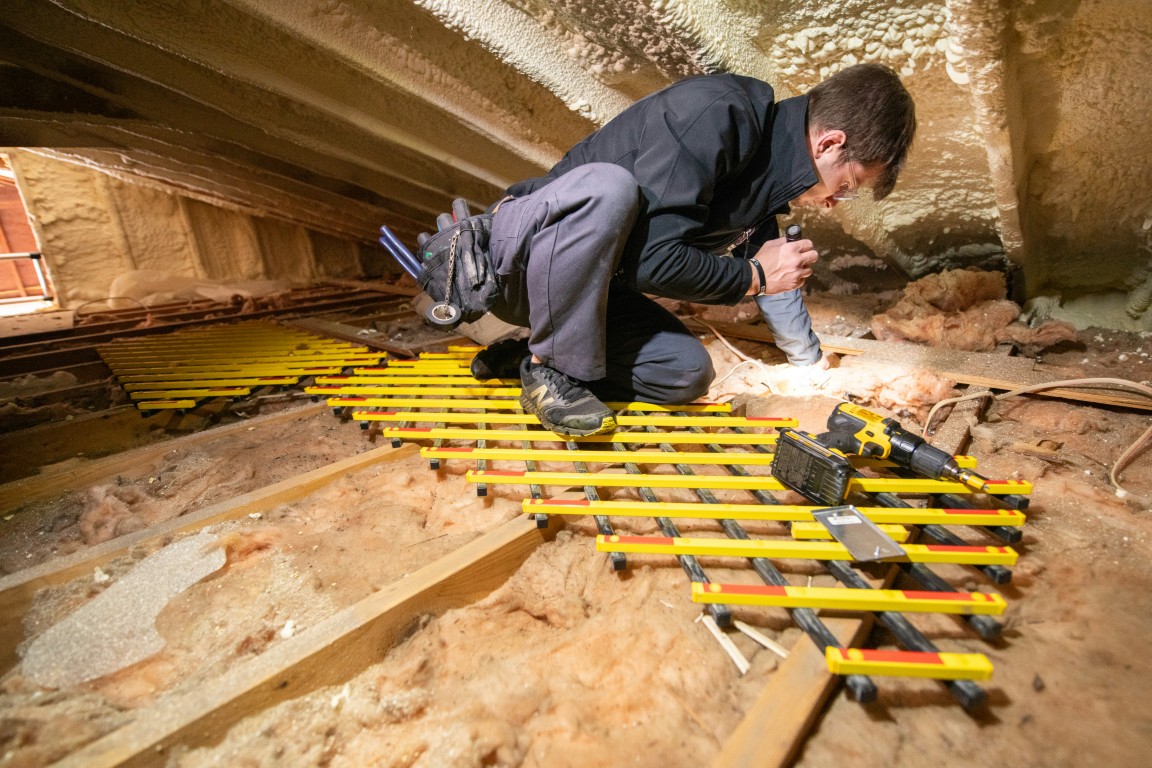
If you’ve ever looked into upgrading your attic or crawlspace, you’ve likely run into the term R-value. Most homeowners know that a higher number is generally considered to be better, but few understand what that number actually measures, or why it’s the secret to a lower utility bill and a more comfortable home.
At Above Board, we don’t just remove mold and pests. We restore the thermal envelope of your home. Understanding R-value is the first step in ensuring your Remediation is Done Right the First Time.
What Exactly is R-Value?
In simple terms, R-value measures thermal resistance. It is a rating of how well a specific material resists the transfer of heat.
This depends on seasons. In the winter, heat wants to escape your warm living room and head into the cold attic. A high R-value acts as a barrier, keeping the heat where you paid for it to be. But in the summer, heat from the sun-baked roof wants to push its way into your cool, air-conditioned home. Insulation with the correct R-value blocks that heat push.
The R stands for Resistance. The higher the number, the more effective the material is at preventing heat from moving through your walls, ceilings, and floors.
Why R-Value Matters for Your Home
Investing in the right R-value isn’t just a technical upgrade – it’s a lifestyle improvement.
1. Consistent Comfort
Have you ever noticed warm spots in your home during July or felt a draft in the hallway in January? That is often a sign of uneven or insufficient R-value. Proper insulation ensures that the temperature in your bedroom is the same as the temperature in your kitchen.
2. HVAC Longevity
When your home is poorly insulated, your furnace and AC have to cycle on and off constantly to keep up. This leads to premature wear and tear. High R-value insulation allows your system to rest, extending its lifespan and saving you from a multi-thousand dollar replacement bill.
3. Noise Reduction
While R-value specifically measures heat, the materials used are also excellent at dampening sound. Upgrading your insulation can make your home feel significantly quieter and more private.
When High R-Value Goes Low
Looking towards mold and pests is where the Above Board expertise comes in. You can have the most expensive R-49 insulation in your attic, but it won’t work if it’s compromised.
If rodents have been nesting or tunneling in your fiberglass batts, they compress the material. Since insulation works by trapping air, compressed insulation loses a massive chunk of its R-value. And another common concern, when insulation gets damp from a basement leak or roof gap, the water fills those air pockets. Wet insulation doesn’t resist heat. Instead, it actually conducts it. Furthermore, wet insulation becomes a breeding ground for mold, which can eventually spread into your home’s air supply.
Choosing the Right R-Value for Your Region
The ideal R-value depends heavily on where you live. For homeowners in the Northeast, the requirements are much higher than for those in the South.
For example, a typical attic in a cold climate should aim for an R-49 to R-60 rating. However, it’s not just about the thickness of the material, it’s also about the integrity of the installation. Even a small gap in your insulation can lead to a thermal bridge that lets massive amounts of energy escape.
Restoration Starts with an Inspection
At Above Board, we believe that a healthy home is a dry, pest-free, and energy-efficient home. If your insulation has been damaged by moisture or unwanted visitors, it’s doing more than just letting heat out—it’s costing you money every single day.
Our team doesn’t just patch problems. We assess your home’s current thermal resistance, remove contaminated materials safely, and install high-quality solutions that last.
Is your insulation working as hard as it should? Contact Above Board today for an efficiency and moisture assessment. Let’s make sure your home stays comfortable all year long.